Tips for Turning Baseball Bats
Turning a baseball bat is one of the most satisfying spindle projects you can take on — and one of the most demanding. You're working a 33-inch piece of wood down to a handle diameter under an inch, which means chatter, flex, and tool control all matter more than on shorter spindles. Paul Bertorelli documented the precision behind Louisville Slugger's bat-turning operation in Fine Woodworking #40 (1983), where factory turners shape each bat to a player's exact specifications — barrel diameter, handle taper, knob profile — on a copy lathe in under a minute. You won't match that speed, but you can absolutely turn a bat that plays.
This guide covers wood selection, lathe setup, the actual turning process, and the finishing steps to produce a functional, game-ready bat.
Wood Selection
Not all hardwoods make good bats. The wood needs to combine impact resistance, stiffness, and light weight — and it needs to be straight-grained.
| Species | Janka (lbf) | Weight | Why It Works |
|---|---|---|---|
| White Ash | 1,320 | Light | The traditional choice. Flexes on impact, absorbs vibration. Has been losing ground to maple since the late 1990s. |
| Hard Maple | 1,450 | Medium | Denser and stiffer than ash. Doesn't flake — it shatters (which is actually an advantage for durability until failure). Now the most popular wood in professional baseball. |
| Yellow Birch | 1,260 | Medium | Similar density to maple with slightly more flex. Legal in most leagues. A good middle ground. |
| Hickory | 1,820 | Heavy | What Babe Ruth swung. Extremely durable but heavy — modern players prefer lighter bats for bat speed. |
Critical: The grain must run straight along the full length of the blank. Runout (angled grain) weakens the bat catastrophically — a bat with grain running at even 5-10 degrees off-axis can snap on contact. Look at the end grain: the growth rings should be tight, even, and running edge-to-edge across the barrel.
Buy bat-graded blanks (available from Craft Supplies USA, Penn State Industries, and specialty bat blank suppliers) rather than cutting your own from lumber. Bat blanks are split along the grain rather than sawn, which guarantees straight grain orientation.
Bat Specifications
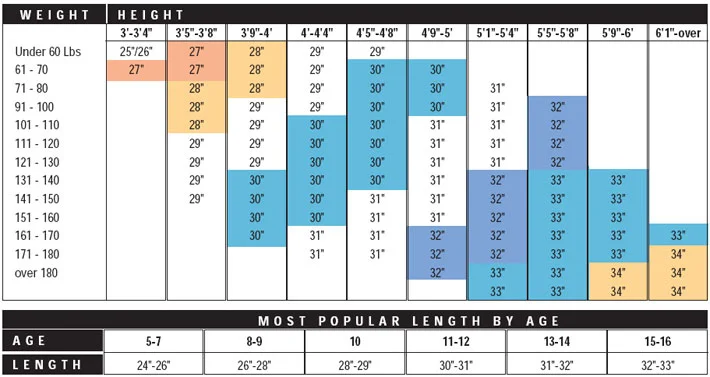
Before you turn, know what you're making. Here are the standard dimensions:
| Spec | Youth (Little League) | Adult (High School/College) | Pro (MLB) |
|---|---|---|---|
| Length | 26–32" | 30–34" | 32–36" |
| Max barrel diameter | 2¼" (standard), 2⅝" (some leagues) | 2⅝" | 2.61" |
| Handle diameter | ¾"–⅞" | ⅞"–1" | 15/16"–1" |
| Drop weight | -8 to -13 | -3 (BBCOR) | Varies by player |
| Knob width | ½" | ½" | ½"–¾" |
League requirements matter. High school and college bats must meet BBCOR certification standards. Little League has specific barrel diameter restrictions. Know your league's rules before you start — a bat that doesn't meet spec is expensive firewood.
Lathe Setup
- Minimum bed length: 36" between centers for a full-size bat. A midi lathe won't work — you need a full-size lathe.
- Drive: Spur drive or steb center at the headstock. Mount the knob end at the headstock and barrel end at the tailstock.
- Speed: Start at 800–1,000 RPM for roughing a square blank. Move to 1,500–2,000 RPM as the blank rounds out and diameter reduces.
- Tool rest: Position close to the work and adjust frequently as diameter changes. The closer the rest, the less chatter.
Tools You'll Need
- Spindle roughing gouge (¾" or 1") — for taking the blank from square to round
- Spindle gouge (⅜" or ½") — for shaping the taper and barrel curves
- Parting tool — for setting reference diameters
- Skew chisel (1" or 1½") — optional but excellent for finishing cuts on the barrel
- Outside calipers — essential for checking diameters at multiple points
- Steady rest — highly recommended for the handle section (see below)
See our guide to best woodturning tools for brand recommendations.
The Turning Process
1. Rough to Round
Mount the blank between centers and use the roughing gouge to take it from square to a cylinder. Work the full length evenly — don't reduce one section before another, or you'll create a weak point that flexes.
2. Mark Reference Points
With the blank round, mark the key transition points with a pencil while the lathe turns slowly:
- Barrel end (0"): the tip of the bat
- Barrel zone (0–8"): where diameter is at maximum
- Taper zone (8–20"): the gradual reduction from barrel to handle
- Handle zone (20–30"): the grip area, roughly 1" diameter
- Knob (30–33"): the flared end at the headstock
3. Set Guide Diameters
Use the parting tool and calipers to cut shallow reference grooves at each transition point. For a standard 33"/30oz bat:
- Barrel: 2½" diameter
- Mid-taper: 1½"
- Handle: 1"
- Knob: 1¼" wide, 1½" diameter
4. Shape the Barrel
Working from the barrel tip toward the taper, connect your reference diameters with smooth, sweeping cuts using the spindle gouge. Roll over the barrel end to create the rounded tip. Take light cuts — the barrel is the thickest section and the most visible.
5. Turn the Handle
This is where things get challenging. As the handle diameter drops below 1½", the blank will flex under tool pressure, causing chatter — spiral marks that are difficult to sand out.
Three ways to fight chatter:
- Hand support: Cup your left hand behind the workpiece (not around it) to dampen vibration while cutting with your right. Keep fingers behind the work, never wrapping around it.
- Steady rest: Mount a steady rest at the midpoint of the handle section. This virtually eliminates chatter by supporting the work on three sides. As Bertorelli noted in his Louisville Slugger article (FWW #40), the factory uses mechanical followers that track the workpiece — a steady rest is the home-shop equivalent.
- Light cuts and sharp tools: A dull tool requires more pressure, which causes more flex. Keep your gouge freshly sharpened and take finishing passes no deeper than 1/32".
6. Form the Knob
The knob is the last section to shape. Use the parting tool to establish its width (typically ½"), then shape the profile with a spindle gouge or skew. The knob should flare slightly wider than the handle to prevent the bat from slipping out of the batter's hands.
7. Sand and Finish
Sand at reduced speed (500–700 RPM) progressing through 120, 180, 220, and 320 grit. Support the handle section with your free hand while sanding to prevent flex.
For a game-ready finish:
- Apply 3–4 coats of spray lacquer, allowing each coat to dry fully
- Lightly sand between coats with 320 grit
- For a traditional look, leave the barrel unfinished above the brand area and apply pine tar or grip tape to the handle
For decorative display bats, a wipe-on polyurethane or Danish oil produces a beautiful result.
Common Mistakes
- Reducing the handle too early: Work all sections progressively. If you thin the handle while the barrel is still heavy, the blank will whip.
- Ignoring grain orientation: The bat face (the flat-grain side) should contact the ball. Mark the face before mounting and orient accordingly.
- Skipping the steady rest: If your bat has spiral marks on the handle, you either need a steady rest or lighter cuts. Probably both.
- Wrong wood: Don't turn softwoods, construction lumber, or short-grained species. A bat failure at game speed is dangerous.
Frequently Asked Questions
Written by Vince
Vince is a woodturner and the founder of WoodturningOnline. He writes tool reviews, buying guides, and turning tutorials to help woodturners at every level make informed decisions about their craft and equipment.