Lathe Chucks: Types, Parts, and Selecting the Right Piece for the Job
A lathe chuck is one of the most important accessories for any woodturner. It's what holds your workpiece securely while you shape, hollow, and finish it on the lathe. Choosing the right chuck — and understanding the different jaw types — can make the difference between safe, efficient turning and frustrating, dangerous work.
In this guide, we cover every type of woodturning chuck, the major brands (Nova, Oneway, Teknatool, Axminster), jaw compatibility, and how to match your chuck to your lathe's spindle thread.
About this guide — I'm Vince, founder of WoodturningOnline. I use scroll chucks daily in my shop and have tested models from Nova, Oneway, and PSI. This guide reflects hands-on experience with different chuck systems and jaw configurations.
How a Woodturning Chuck Works
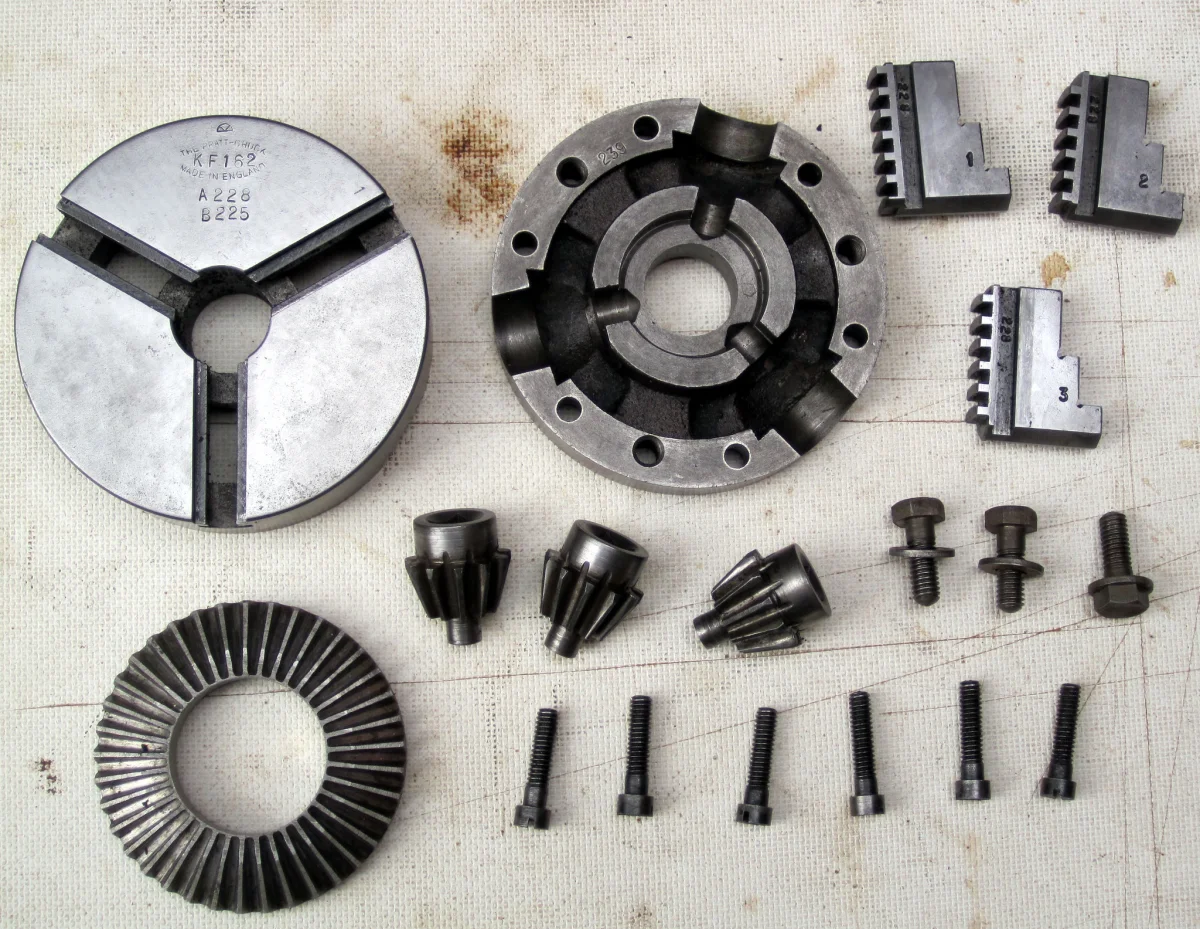
A woodturning chuck mounts to your lathe's headstock spindle and grips the workpiece with adjustable jaws. Most modern woodturning chucks are 4-jaw self-centering scroll chucks — all four jaws move simultaneously when you turn the chuck key, centering the workpiece automatically.
The jaws can grip in two modes:
- Compression (external grip): The jaws close around the outside of a tenon you've turned on the workpiece. This is the most common method for bowl turning.
- Expansion (internal grip): The jaws expand into a recess (mortise) you've turned into the workpiece. Used when you don't want a tenon on the bottom of your piece.
For more on how to mount work to your lathe, see our guide on lathe chuck mounting methods.
How Chucks Replaced Faceplates
For most of woodturning history, the faceplate was the primary workholding device. Ralph Tursini wrote in Fine Woodworking #212 (2011) that scroll chucks have been "steadily replacing faceplates over the past few decades" — and for good reason. A scroll chuck lets you mount, remove, and remount a workpiece in seconds. With a faceplate, you need to drive screws into the wood every time, leaving holes that must be turned away.
That said, faceplates aren't obsolete. They're still the safest initial mounting method for large, rough, or irregular blanks. Many experienced turners mount a blank on a faceplate first, turn a tenon, then switch to a scroll chuck for the rest of the work. The faceplate gives you the most secure grip when the workpiece is at its heaviest and most unbalanced.
Types of Woodturning Chucks
4-Jaw Scroll Chuck
The 4-jaw scroll chuck is the standard workhorse for woodturning. All four jaws are connected by a scroll mechanism, so they move in and out together when you turn the key. This self-centering design means quick, accurate workholding.
Most serious turners consider a quality 4-jaw scroll chuck essential. As Fine Woodworking #113 (1995) detailed in an article on compression chucks, a well-made chuck with proper jaws is what separates professional results from beginner work.
Best for: Bowl turning, hollow forms, platters, boxes — virtually all faceplate work.
Faceplate
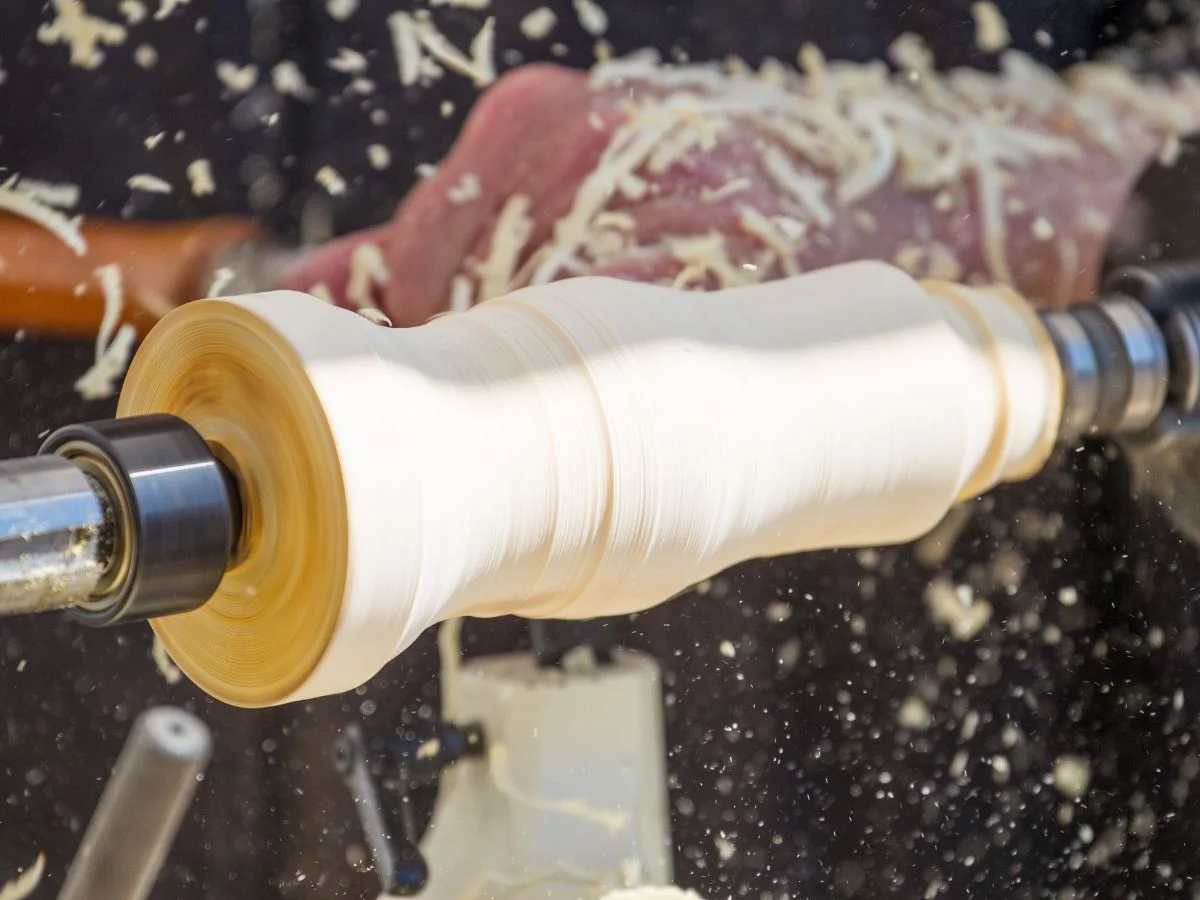
A faceplate is a flat metal disc that screws onto the lathe spindle. You attach the workpiece to the faceplate with screws driven through the plate into the wood. As covered in Fine Woodworking #218 (2011), faceplate turning is the foundation of all face-grain work — bowls, platters, and artistic pieces.
Faceplates are the safest way to initially mount a rough blank, especially large or irregular pieces. Many turners mount the blank to a faceplate first, turn a tenon, then switch to a scroll chuck for the remainder of the work.
Best for: Initial mounting of rough blanks, large or heavy workpieces, situations where maximum grip security is needed.
Screw Chuck
A screw chuck uses a single heavy-duty screw that threads into the center of the workpiece. Fine Woodworking #25 (1980) described an improved screw chuck design, noting that it "requires little preparation of stock, wastes little wood, and the work is easy on, easy off."
Screw chucks are fast for small to medium work but have limitations: the wood must be sound (no cracks or soft spots around the screw hole), and the screw hole may need to be plugged or turned away in the finished piece.
Best for: Small bowls, ornaments, boxes, and any work where speed of mounting matters.
Collet Chuck
Collet chucks grip cylindrical stock with extreme precision. In woodturning, they're most commonly used for pen turning — holding pen mandrels and pen blanks accurately. The Beall Collet Chuck is a well-known example.
Best for: Pen turning, tool handle turning, any work requiring precise centering of cylindrical stock.
Vacuum Chuck
A vacuum chuck uses suction to hold the workpiece against a flat surface. This allows you to reverse-mount a bowl to finish the bottom without leaving any marks from jaws or screws. Requires a vacuum pump and an adapter for your lathe spindle.
Best for: Finishing the bottom of bowls and platters, delicate pieces that can't be gripped with jaws.
Pin Chuck / Drive Center
Not a chuck in the traditional sense, but a common mounting method. A drive center (spur center) fits into the headstock spindle and drives the workpiece with prongs. The tailstock live center supports the other end.
Best for: Spindle turning between centers — table legs, tool handles, balusters, candlesticks.
Chuck Jaw Types
The jaws are where the real versatility of a scroll chuck lies. Most quality chucks accept interchangeable jaw sets:
| Jaw Type | Grip Range | Best For |
|---|---|---|
| Standard jaws | 45–90mm (compression/expansion) | General bowl and spindle work |
| Mini jaws | 20–50mm | Small boxes, ornaments, pen blanks |
| Large jaws | 80–150mm | Large bowls, platters |
| Cole jaws | 100–350mm+ (rubber bumpers) | Reverse-mounting bowls to finish bottoms |
| Dovetail jaws | Matches dovetail tenon profile | Strongest grip, requires dovetail tenon on workpiece |
| Pin jaws | Small pins grip end-grain | Ornaments, small hollow forms |
| Longworth-style | Adjustable arms | Reverse-mounting, very large bowls |
Teknatool's Infinity system (Fine Woodworking #246, 2016) introduced quick-change jaw slides that let you swap jaws in seconds without tools — a significant time-saver if you switch between projects frequently.
Easy Wood Tools' Easy Chuck (Fine Woodworking #236, 2014) was designed specifically to simplify the chuck selection process for beginners.
Chuck Brand Comparison
| Brand | Popular Models | Thread Options | Jaw System | Price Range |
|---|---|---|---|---|
| Nova (Teknatool) | G3, SuperNova2, Infinity | 1" x 8 TPI, M33 x 3.5, others | Nova jaw inserts | $80–200 |
| Oneway | Talon, Stronghold | 1" x 8 TPI, M33, 1-1/4" x 8 | Oneway proprietary | $150–300 |
| Axminster | Evolution SK100, SK114 | 1" x 8 TPI, M33 x 3.5 | Axminster jaws | $100–180 |
| PSI Woodworking | Barracuda2 | 1" x 8 TPI, M33 | PSI jaws | $60–120 |
| Easy Wood Tools | Easy Chuck | 1" x 8 TPI | Integrated | $120–160 |
| Record Power | SC4, Patriot | 1" x 8 TPI, M33 | Record jaws | $90–170 |
Our recommendation: For most turners, the Nova G3 or SuperNova2 offers the best combination of quality, jaw variety, and value. The Oneway Talon is the premium choice — built like a tank with excellent concentricity. For budget-conscious beginners, the PSI Barracuda2 is a solid entry point.
Spindle Thread Compatibility
Your chuck must match your lathe's headstock spindle thread. Common thread sizes:
| Thread | Common Lathes |
|---|---|
| 1" x 8 TPI | Most mid-size lathes: Nova, Jet, Rikon, Delta, Grizzly |
| M33 x 3.5mm | Many European lathes, some Nova and Jet models |
| 1-1/4" x 8 TPI | Larger lathes: Oneway, Powermatic, some Robust |
| 3/4" x 16 TPI | Mini lathes: some Rikon, Wen, Harbor Freight models |
Most chuck manufacturers sell thread adapters (called inserts) so you can use the same chuck body on different lathes. Always buy the insert that matches your lathe — never force a mismatched thread.
How to Choose a Chuck for Woodturning
- Check your spindle thread — this determines which chuck inserts you need
- Consider your typical work size — a 4-jaw scroll chuck with standard jaws covers most bowl and spindle work
- Buy one with interchangeable jaws — you'll want to add jaw sets as your skills grow
- Don't overspend at first — a $80–150 chuck is fine for beginners. Upgrade when you know what you need
- Get a faceplate too — it's the safest initial mounting method for rough blanks
What Turners Actually Buy
Based on discussions across r/turning and r/woodworking, the Nova G3 is the most commonly purchased first chuck. It comes up in nearly every "which chuck should I buy?" thread. The reasons: reasonable price ($80-120), wide jaw selection, and the insert system that lets you switch to a different lathe without buying a new chuck.
For turners who want premium quality, the community splits between Oneway Talon and Vicmarc VM100/VM120. The Talon gets described as "I put that on everything" — turners praise its concentricity and build quality. Vicmarc fans emphasize precision machining and argue it's the best chuck for thin-walled bowls where runout matters.
The critical lesson most beginners learn the hard way: tenon sizing matters more than chuck quality. One r/turning member shared that they were about to spend $200 on a new chuck before realizing their workpieces were flying off because of improperly sized tenons — not because of the chuck itself. The tenon must match the jaw's sweet spot diameter for maximum grip.
Avoid tommy bar chucks — threads consistently warn against cheap chucks that use two opposing bars to tighten. The community strongly prefers T-handle key chucks from established turning brands.
Tenon Sizing Guide
The tenon (or recess) you turn on your workpiece must match your chuck jaw size for a secure grip. Getting this wrong is the most common cause of workpieces flying off the lathe.
| Chuck Jaw Size | Ideal Tenon Diameter | Tenon Height | Max Safe Workpiece Weight |
|---|---|---|---|
| Mini jaws (25mm) | 20–25mm (3/4"–1") | 3–5mm (1/8"–3/16") | 0.5 kg (1 lb) |
| Standard jaws (50mm) | 45–50mm (1-3/4"–2") | 5–6mm (3/16"–1/4") | 2 kg (4.5 lb) |
| Standard jaws (75mm) | 70–75mm (2-3/4"–3") | 6–8mm (1/4"–5/16") | 4 kg (9 lb) |
| Large jaws (100mm) | 95–100mm (3-3/4"–4") | 8–10mm (5/16"–3/8") | 6 kg (13 lb) |
Key rules:
- The tenon should be slightly smaller than the jaw's maximum grip — leave 1–2mm of room so the jaws can close fully.
- Cut a slight dovetail angle (about 5°) on the tenon to match the dovetail profile in the jaws. This gives a mechanical lock, not just friction.
- The shoulder (flat face where the jaw contacts the wood) must be clean and flat. A rounded or uneven shoulder means the jaws are gripping the tenon walls only, not the shoulder — and that's how pieces come loose.
- For expansion grip (jaws expanding into a recess), the recess depth should be at least 3mm (1/8") and the walls must be clean and parallel.
Frequently Asked Questions
Written by Vince
Vince is a woodturner and the founder of WoodturningOnline. He writes tool reviews, buying guides, and turning tutorials to help woodturners at every level make informed decisions about their craft and equipment.