Best Wood for Woodturning
Woodturning is extremely satisfying — you take a rough piece of timber and shape it into a finished bowl, vase, or spindle. But not all species behave the same on the lathe. Some cut cleanly with minimal tearout; others fight you every step.
This guide covers the species turners actually reach for, with the technical details that matter: Janka hardness (resistance to denting), grain behavior under a gouge, and finishing characteristics. We also cover green vs. dry turning and species to avoid.
About this guide — I'm Vince, founder of WoodturningOnline. I've turned everything from green cherry to kiln-dried ebony. This guide reflects what I've learned about species behavior on the lathe — which woods are forgiving, which fight back, and which produce stunning results.
How to Choose Wood for Turning
Three properties determine how a species performs on the lathe:
- Janka hardness — the sweet spot for turning is 900–1,500 lbf. Below 700, fibers tear instead of shearing cleanly. Above 1,800, you'll be sharpening constantly.
- Grain structure — tight, closed-pore species (cherry, maple) come off the gouge nearly finish-ready. Open-pored species (oak, ash, elm) require more sanding and may need grain filler.
- Moisture content — green (freshly cut) wood turns much easier than dry stock, but must be rough-turned oversize and dried before finish-turning. As Howard Lewin explained in Fine Woodworking #147 (2001), uniform wall thickness is the key — a 10-inch bowl should be rough-turned to about 2-inch wall thickness, sealed with end-grain sealer, and set aside for 3–6 months.
Quick Comparison
| Species | Janka (lbf) | Best For | Grain | Turning Difficulty | Availability |
|---|---|---|---|---|---|
| Cherry | 950 | Bowls, spindles | Closed, fine | Easy | Common |
| Hard Maple | 1,450 | Bowls, platters, pens | Closed, fine | Moderate | Common |
| Walnut | 1,010 | Bowls, hollow forms | Open, straight | Moderate | Common |
| Boxelder | 720 | Bowls (flame figure) | Closed, soft | Easy | Regional |
| Birch | 1,260 | Bowls, platters | Closed, fine | Easy–moderate | Common |
| Beech | 1,300 | Bowls, kitchen items | Closed, plain | Moderate | Common |
| Red Elm | 1,320 | Bowls, hollow forms | Interlocked | Moderate–hard | Regional |
| Bradford Pear | 1,680 | Bowls, spindles | Closed, fine | Hard | Salvage only |
| Rosewood | 1,780–3,170 | Pens, small vessels | Tight, oily | Hard | Expensive/restricted |
| Ebony | 3,220 | Pens, small turnings | Very tight | Very hard | Very expensive |
How I Choose Turning Wood
After years at the lathe, my wood selection comes down to five questions in this order:
- What am I making? Bowls need species that handle faceplate forces (closed grain, moderate hardness). Spindles need straight grain that won't split. Pens need tight grain that takes a high polish.
- What Janka range works? 900-1,500 lbf is the sweet spot. Below 700 (basswood, pine), the fibers tear instead of shearing. Above 1,800 (rosewood, ebony), you'll be sharpening every few minutes and generating dangerous dust.
- Green or dry? Green wood is a pleasure to turn — the gouge slides through wet fibers like butter. But the piece must be rough-turned oversize and dried for months before finishing. Dry stock is ready to finish-turn immediately but requires sharper tools and slower speeds.
- What's the grain doing? Straight grain is predictable. Figured grain (curly maple, crotch walnut) is beautiful but catches more easily. Interlocked grain (elm) requires very sharp tools and light cuts.
- Is it safe to turn? Some exotic species produce toxic dust. Cocobolo, padauk, and yew are sensitizers — meaning repeated exposure can trigger allergic reactions even if earlier exposures caused no problems. Always wear respiratory protection with exotics. See our safety guide.
Best Woods for Turning
Cherry
Buy Bowl Blanks | Buy Square Blanks
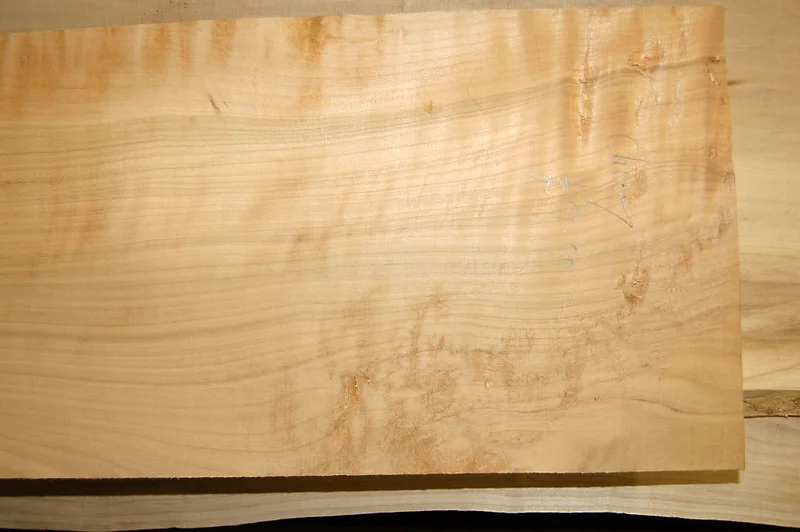
Janka: 950 lbf — the ideal beginner turning wood.
Cherry is the species most turners recommend first. It's a closed-pore hardwood that shears cleanly under a sharp gouge, producing long ribbons of shaving and a surface that needs minimal sanding. The grain is tight and cooperative in every orientation — face grain, end grain, and cross-grain all behave predictably.
Cherry darkens from pale pinkish-tan to a rich reddish-brown with UV exposure and oil finishes. The color shift happens within weeks and deepens over years. A few coats of Danish oil or walnut oil bring out the grain beautifully. For a harder finish on functional pieces, wipe-on polyurethane or lacquer work well — Fine Woodworking tested 16 wiping varnishes and found General Finishes Wood Turners Finish among the best performers.
Turning tips: Cherry turns beautifully green or dry. For bowls, green cherry rough-turns easily and distorts only slightly during drying (compared to maple). Run at 800–1,200 RPM for bowls, 1,500–2,500 RPM for spindles.
Hard Maple
Janka: 1,450 lbf — harder than cherry but worth the effort.
Hard maple (sugar maple) is the workhorse of American woodturning. It's widely available, affordable, and the figured varieties — curly, quilted, bird's-eye, and spalted — produce some of the most dramatic turned pieces in any wood. Maple is what most turners grab when they want a reliable blank.
The wood is harder than cherry, which means more frequent trips to the grinder but also crisper detail and a glass-smooth finish. The closed grain takes lacquer and oil finishes equally well.
Turning tips: Maple dulls tools faster than cherry — keep your gouges sharp. For figured maple, take very light finishing cuts to avoid tearout along the wavy grain. Spalted maple (partially decayed) turns well but may have soft, punky zones — stabilize these with thin CA glue before turning. Run at 800–1,000 RPM for bowls.
Walnut
Buy Bowl Blanks | Buy Square Blanks
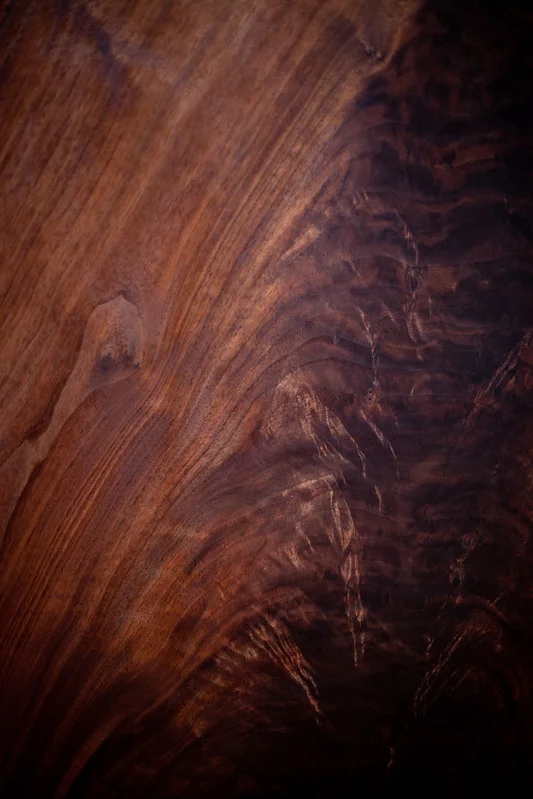
Janka: 1,010 lbf — right in the sweet spot.
Black walnut is prized for its rich chocolate-brown heartwood with lighter sapwood streaks. It's moderately hard with a straight, open grain that responds well to sharp gouges. The open pores mean you won't get a mirror finish straight off the tool — plan on sanding through 320–400 grit.
Walnut is one of the best species for hollow forms because it's dimensionally stable and carves predictably. The end grain can be stubborn to sand, so take light finishing cuts with a freshly sharpened gouge rather than fighting it with sandpaper.
Turning tips: Walnut dust is a skin irritant for some people — wear a respirator. Use Danish oil or an oil/wax blend for a natural finish that deepens the color. Avoid polyurethane on walnut — it yellows over time and clashes with the cool brown tones. Run at 800–1,200 RPM for bowls.
Boxelder
Buy Bowl Blanks | Buy Square Blanks
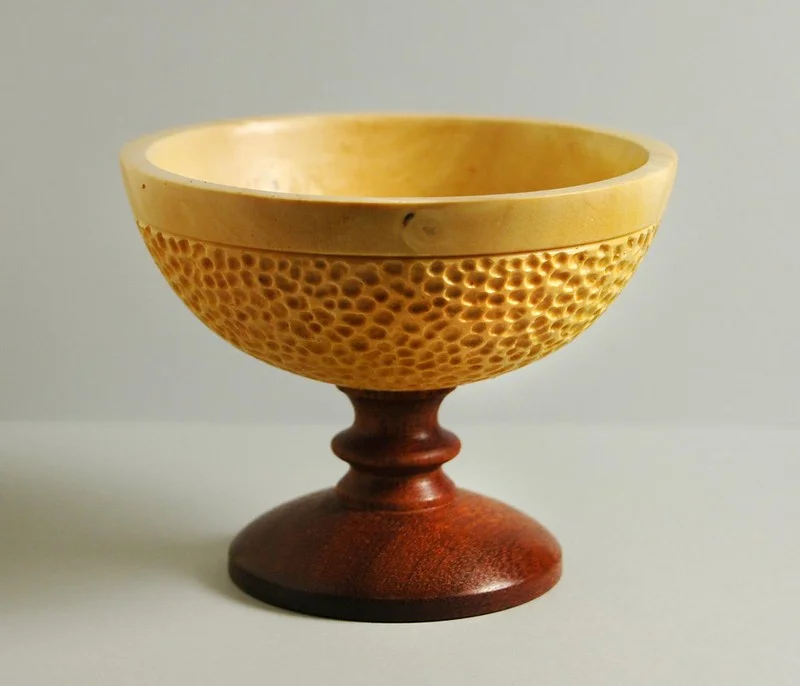
Janka: 720 lbf — soft enough to turn easily, hard enough to hold detail.
Boxelder is technically a maple species (Acer negundo), and turners seek it out for one reason: the brilliant red or pink flame streaks caused by Fusarium fungus colonizing the heartwood. No two blanks are alike. A boxelder bowl with strong flame figure is one of the most visually striking objects in woodturning.
The wood is soft and turns easily but can be fuzzy — especially end-grain areas. Sharp tools and light cuts prevent tearout. The red coloring fades with UV exposure, so finish with a UV-resistant lacquer or keep pieces out of direct sunlight.
Turning tips: Boxelder is almost always turned green (that's how you get the strongest color). Rough-turn oversize, dry, then finish-turn. The wet wood can smell strong — work in a ventilated space. Run at 1,000–1,500 RPM for bowls.
Birch
Janka: 1,260 lbf — underrated and widely available.
Birch doesn't get the attention it deserves in turning. It's a closed-grain hardwood that cuts cleanly, sands easily, and takes stains and dyes well. The pale, creamy color makes it a good canvas for colored finishes or for projects where you want a light-toned piece. Birch is also one of the cheapest turning woods you can buy.
Turning tips: Birch doesn't have the dramatic grain of walnut or the warm color of cherry, but it's the ideal practice wood — cheap, forgiving, available at any lumber yard. For bowls, birch behaves similarly to maple at the lathe. Run at 800–1,200 RPM.
Beech
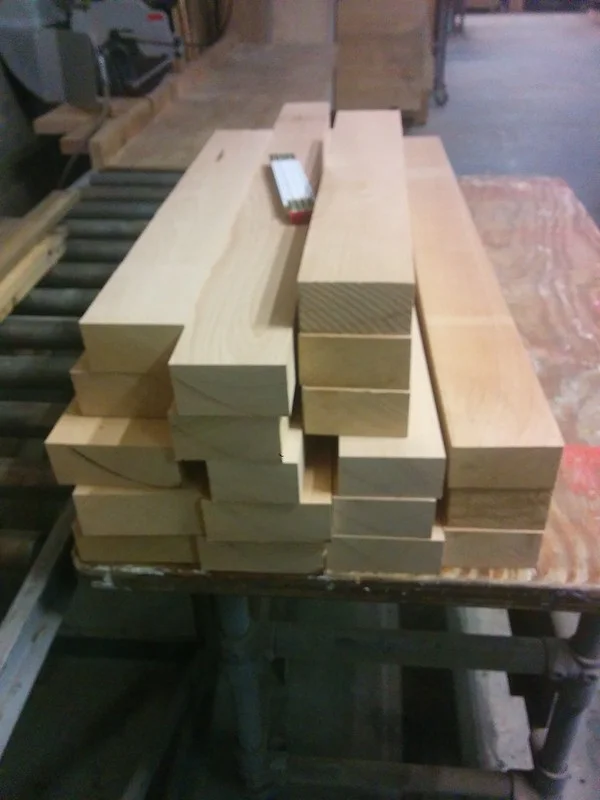
Janka: 1,300 lbf — hard, durable, and food-safe.
Beechwood doesn't have dramatic grain, but that's actually an advantage for kitchen items where a clean, neutral appearance is desirable. Beech is extremely durable and resistant to abrasion, making it a top choice for turned bowls, plates, scoops, and rolling pins that will see daily use.
The wood responds well to food-safe finishes — mineral oil, walnut oil, or a beeswax/mineral oil blend. Sand with the grain (never across it) to avoid visible scratches on the plain surface.
Turning tips: Beech moves a lot during drying — if green-turning, expect more distortion than cherry or walnut. For dimensionally stable results, use kiln-dried stock. Run at 800–1,200 RPM for bowls.
Red Elm
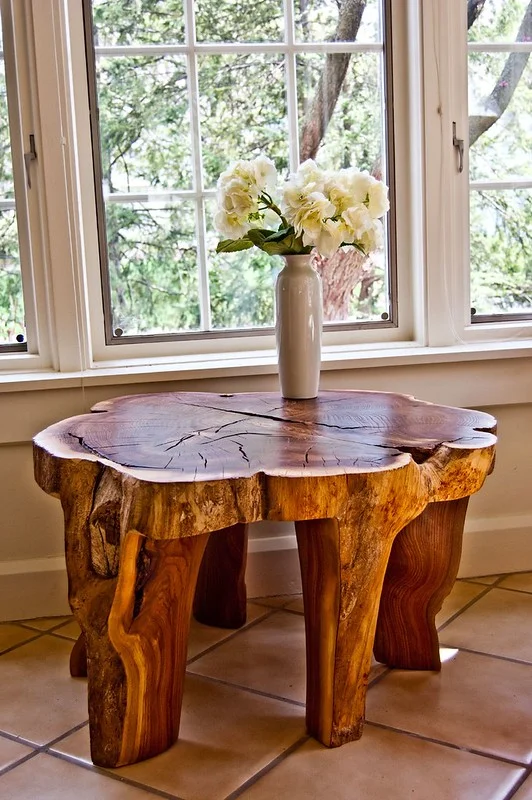
Buy Bowl Blanks | Buy Square Blanks
Janka: 1,320 lbf — dramatic grain, but demands sharp tools.
Red elm is popular for its interlocked, wild grain patterns that create dramatic bowls. The interlocking makes the wood strong (it won't split easily), but it also means tearout is common if your tools aren't razor sharp. Approach end-grain areas with light shearing cuts.
The wood has a light reddish-brown heartwood with grayish sapwood. American elm and Chinese elm are also turnable, but red elm has the most interesting figure.
Turning tips: Elm is excellent for green turning — the interlocked grain holds together well during drying. Use a bowl gouge with a swept-back grind and take light finishing passes. Run at 600–1,000 RPM for bowls (slower than cherry due to hardness).
Bradford Pear
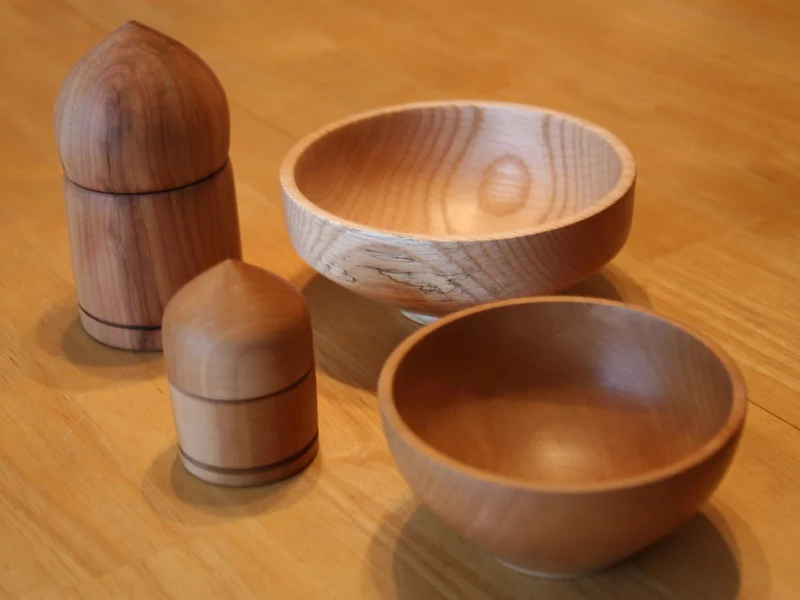
Janka: 1,680 lbf — hard, dense, and beautiful.
Bradford pear is a salvage wood — you won't find it at lumber yards. It comes from ornamental trees that are widely being removed because they're an invasive species. This makes it free, abundant in many cities, and guilt-free to use.
The wood has a warm orange-tan color with fine, closed grain that sands to a glass-like finish. It's hard and dense, so sharp tools are essential, but the results are worth the effort.
Turning tips: Bradford pear logs often have internal stress that causes splitting — saw blanks and rough-turn quickly after felling. The wood turns well green and distorts moderately during drying. Run at 600–1,000 RPM.
Exotic Species: Rosewood and Ebony
Rosewood (Janka: 1,780–3,170 lbf depending on species) and Ebony (Janka: 3,220 lbf) are luxury turning woods reserved for small projects like pens, bottle stoppers, and ornaments where a small amount of expensive material creates a high-value piece.
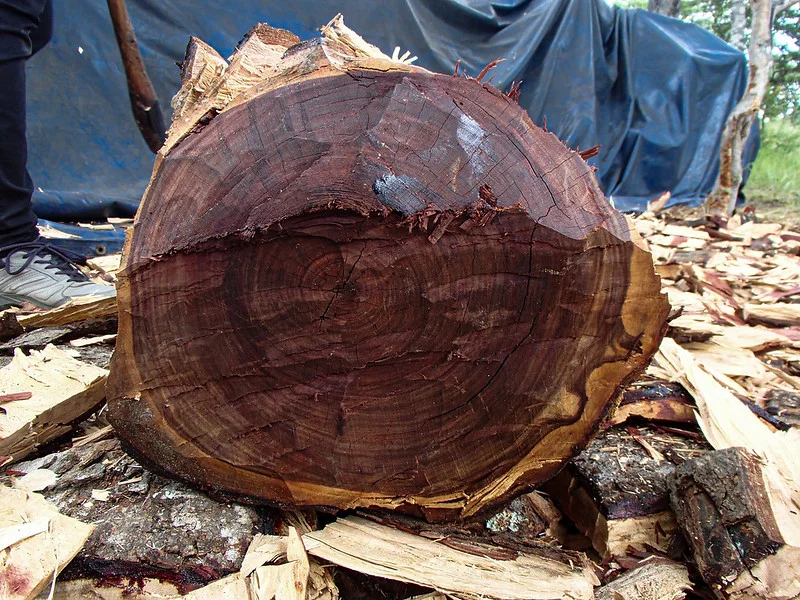
Buy Rosewood Blanks | Buy Ebony Blanks
Both species are extremely hard and will dull HSS tools in minutes — carbide tools are a better choice for exotics. Both produce fine, oily dust that requires a respirator. Rosewood has a fragrance that lasts for years; ebony has a deep black color that's unmatched.
Important: Many rosewood species are CITES-regulated — ensure your source is legal.
Spalted Wood: Beautiful but Tricky
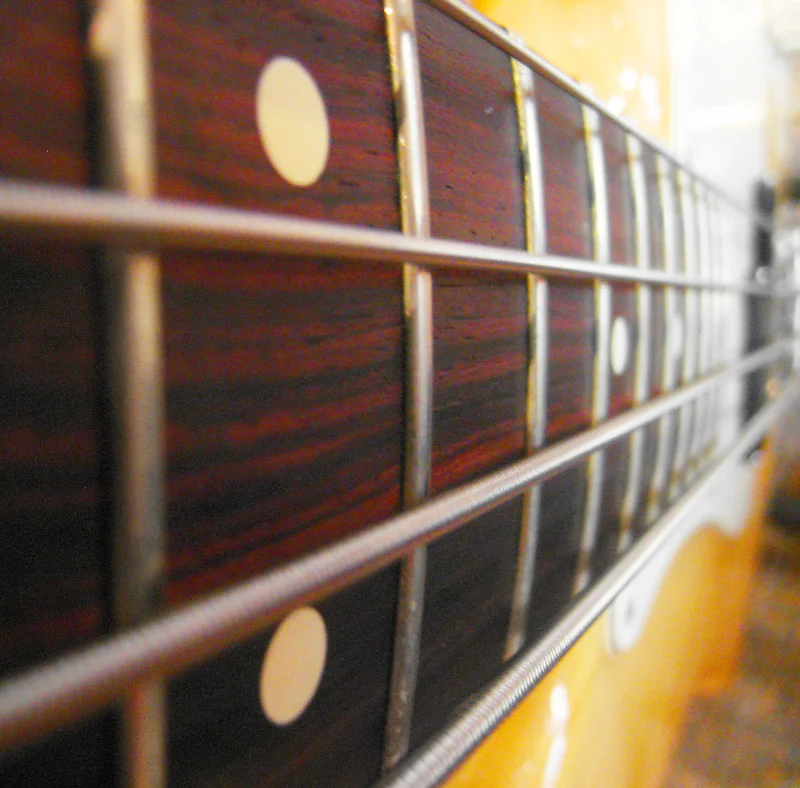
Spalting is a natural process where fungi colonize dead or dying wood, creating dramatic dark zone lines and color changes. Fine Woodworking #199 (2008) published a detailed guide to spalted wood for turners: the best candidates are soft maples, birch, and beech that have been left in contact with the ground for 2-12 months.
The catch: spalted wood is softer and more fragile than sound wood. The fungal zones can be punky (crumbly) and may not hold a tenon well. Tips for turning spalted wood:
- Turn at lower speeds — the soft zones can tear at high RPM
- Use carbide tools — they handle the density changes better than HSS
- Stabilize heavily spalted areas with thin CA (cyanoacrylate) glue before turning
- Wear a respirator — spalted wood dust contains fungal spores that are a respiratory hazard
- The zone lines are most dramatic at the early-to-mid stages of spalting. Once the wood feels punky throughout, it's too far gone.
Exotic Species Worth Trying
Fine Woodworking #4 (1976) featured a woodworker with 20 tons of exotic wood stock and detailed the turning properties of tropical hardwoods. Here are four exotics worth seeking out:
- Cocobolo (Janka 2,960) — stunning orange-to-dark-red color with natural oils that produce a self-polishing effect. Excellent for pens and small vessels. Dust is a strong sensitizer — always use a respirator and dust collection.
- Padauk (Janka 1,725) — vivid orange-red when fresh, darkening to deep brown over years. Turns cleanly and takes a beautiful finish. The dust stains everything it touches.
- Purpleheart (Janka 1,860) — bright purple when freshly cut, darkening to deep plum. Hard on tools but produces gorgeous results. Heat from sanding turns it brown — sand at low RPM with light pressure.
- Ebony (Janka 3,220) — the hardest common turning wood. Expensive and demanding, but nothing matches its black luster. Turn with carbide tools and expect to sharpen frequently with HSS.
Sourcing exotics: Specialty dealers like Woodcraft, Cook Woods, and Bell Forest Products carry turning blanks. For large pieces, check local exotic wood dealers or online retailers. Always verify the species is legally harvested — several rosewoods are CITES-restricted.
Woods to Avoid
Not every species belongs on the lathe:
- Eastern white pine (Janka: 380 lbf) — too soft. Fibers tear instead of shearing, and the sap clogs tools and sandpaper. Pine is fine for carving but frustrating on the lathe.
- Extremely hard exotics without experience — species like ipe (3,510 lbf) and mesquite (2,345 lbf) are turnable but demand sharp carbide tools, slow speeds, and frequent sharpening. Don't attempt them until you're confident with your technique.
- Punky/spalted wood without stabilization — soft, decayed areas will crumble on the lathe. Stabilize spalted blanks with thin CA (cyanoacrylate) glue or resin before turning.
- Manzanita — extremely irregular shape and full of defects. Beautiful to look at but unpredictable on the lathe.
Green Wood vs. Dry Wood
One of the most important decisions in woodturning is whether to turn green (freshly cut) wood or kiln-dried/air-dried stock.
Green wood is significantly easier to cut — the moisture lubricates the tool edge and fibers shear cleanly rather than tearing. As early as Fine Woodworking #3 (1976), Dale Nish described a two-stage approach in "Green Bowls": rough-turn the bowl oversize, let it dry for several months, then remount and finish-turn to final dimensions. This remains the standard method for bowl turners today.
Howard Lewin expanded on this in Fine Woodworking #147 (2001), emphasizing that uniform wall thickness (typically 10% of diameter plus 1 inch) prevents cracking. A 10-inch bowl should be rough-turned to about 2-inch wall thickness, sealed with Anchorseal or melted wax, and set aside for 3–6 months.
Dry wood (8–12% moisture content) is dimensionally stable — what you turn is what you get. It's the better choice for precision spindle work like chair legs, pens, and tool handles, wood rings, and essential when combining wood with resin. Even pine — a softwood most turners avoid — has its place for cutting boards and practice stock.
For drying methods and moisture targets, see our guide on how dry wood should be for turning. If you're sourcing your own stock, a sharp chainsaw and a well-tuned bandsaw are the first tools in the workflow. For sourcing tips, see where to buy wood for woodturning.
Where Turners Find Free Wood
One of the most common questions on r/turning is "where do you get wood?" The community's answer: most turning wood is free if you know where to look.
- Storm-downed trees and neighbor's yards — the #1 source. Let friends, neighbors, and coworkers know you have a lathe. As one turner put it: "Soon you will stop taking their calls, but they will keep bringing you wood anyway."
- Tree service companies — they pay to dispose of logs and are often happy to give them away. ChipDrop is a service that delivers free logs to your doorstep.
- Facebook Marketplace and Craigslist — search "free firewood" or "free logs." Many turners actively scout these after storms.
- Specialty dealers — for exotics and figured wood, turners recommend Woodcraft, Cook Woods, GotWood, and Ocooch Hardwoods. For beginners, the turning community consistently recommends cherry and maple as the best species to learn on — clean grain, moderate hardness, widely available.
One important warning: never turn pressure-treated lumber. The copper-arsenic compounds used in ground-contact lumber are toxic, and the dust is dangerous to inhale.
Frequently Asked Questions
Written by Vince
Vince is a woodturner and the founder of WoodturningOnline. He writes tool reviews, buying guides, and turning tutorials to help woodturners at every level make informed decisions about their craft and equipment.