Safety Equipment for Woodturning
Woodturning is incredibly fun. But the lathe is the most dangerous machine in a woodshop — not because incidents are frequent, but because when something goes wrong, it goes wrong fast. A bowl blank can separate from the chuck and launch across the shop. Fine dust accumulates in your lungs over years. A loose sleeve catches a spinning workpiece before you can react.
The good news: proper safety equipment eliminates nearly all serious risk. This isn't optional gear — it's the price of admission. As Charles Calmbacher wrote in Fine Woodworking #127 (1997), most woodworkers dramatically underestimate the danger of fine dust, which poses a greater long-term health risk than any single acute injury.
In a previous post, we covered what can go wrong at the lathe and how to avoid it. This guide covers the specific equipment you need to protect yourself.
Face Shield — The Single Most Important Item
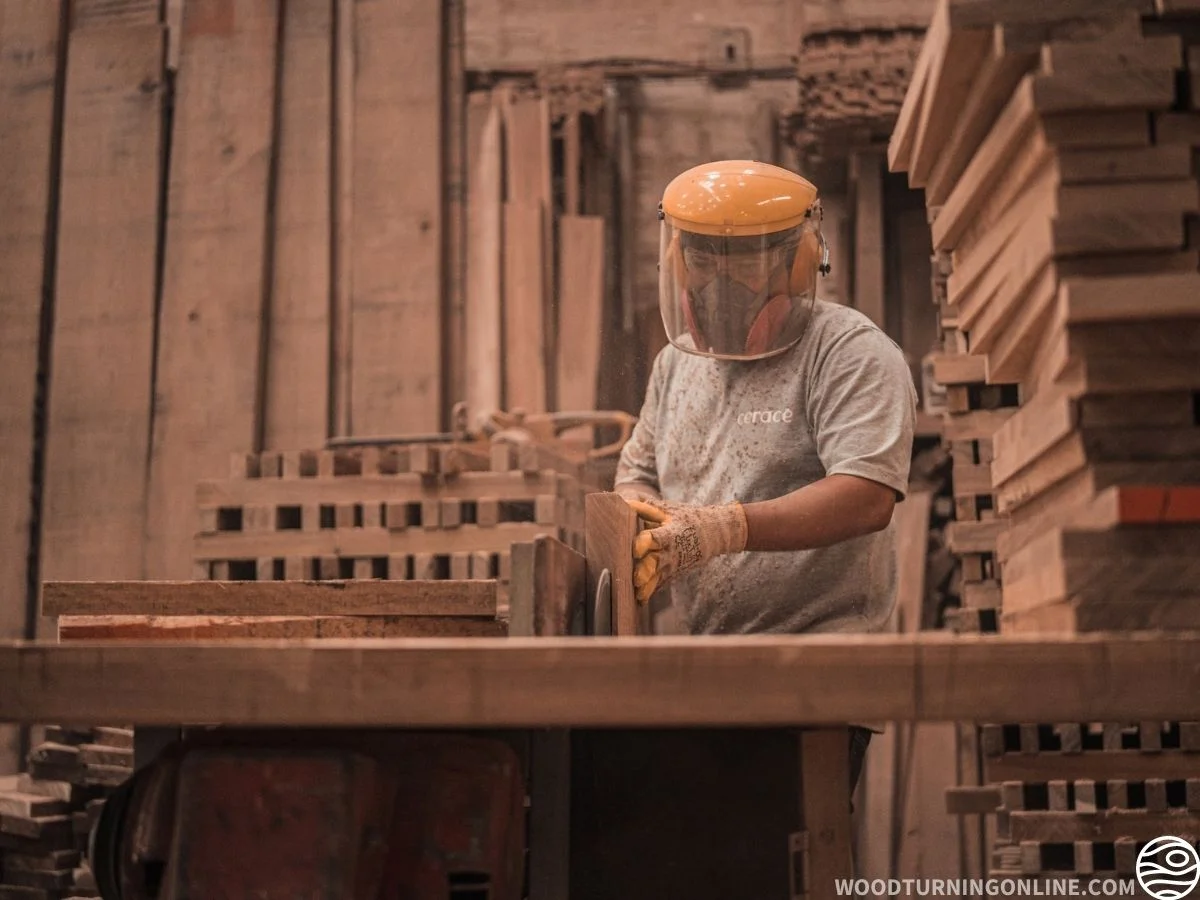
#2: Face Shield on AmazonA full face shield is mandatory for woodturning. Not optional. Not "recommended." Mandatory.
Here's why: unlike table saws or routers, a lathe can throw large pieces of wood directly at your face. A bowl blank that separates from a scroll chuck, a spindle blank with a hidden crack, a roughing gouge catch that splits the workpiece — all of these send material at you, not away from you. Safety glasses protect your eyes from dust and small chips, but they won't stop a chunk of oak.
Face shield vs. safety goggles: The Association of Woodturners of Great Britain (AWGB) recommends a full face visor for all faceplate and side-grain work, where the risk of a workpiece leaving the lathe is highest. For spindle work between centers, goggles may be adequate — but if in doubt, wear the face shield. Most experienced turners wear the shield for every cut.
What to look for: A polycarbonate visor rated to ANSI Z87.1+ (impact-rated). The shield should cover from forehead to below the chin. Replace the visor when it becomes scratched enough to impair visibility.
Important: A face shield alone does not meet eye protection standards. Wear safety glasses underneath the shield — if the visor flips up unexpectedly, your eyes are still protected.
Respiratory Protection
#3: Respirator on AmazonFine wood dust is the silent hazard in woodturning. Unlike a flying chunk of wood (which you'd notice immediately), dust damage is cumulative and irreversible. The particles most dangerous to your lungs are the ones you can't see — below 10 microns, small enough to pass through your nose and lodge deep in the bronchioles.
As the Fine Woodworking article on respiratory hazards (#41, 1983) explained, "Nature's defenses are meant to counter occasional dust storms and pollen outbreaks, not the dust and vapors encountered by present-day woodworkers." Certain species are particularly hazardous: walnut and western red cedar are known sensitizers, and prolonged exposure to hardwood dust is classified as a Group 1 carcinogen by the International Agency for Research on Cancer (IARC).
What you need — a multi-level approach:
- Dust collection at the source: Connect a dust collector or shop vacuum to your lathe. This captures chips and coarser dust before it becomes airborne.
- Ambient air filtration: A ceiling-mounted air scrubber (1,000+ CFM) filters the fine particles that escape collection. Run it during and for 30 minutes after turning.
- Personal respirator: At minimum, a half-mask respirator with P100 particulate filters (pink cartridges). Paper dust masks rated N95 are adequate for short sessions but don't seal well to all face shapes. For maximum protection and comfort during long sessions, a powered air-purifying respirator (PAPR) circulates filtered air through a face shield — combining dust protection with impact protection.
Turners who wear a PAPR (like the Trend AirShield Pro or 3M Versaflo) get face protection, dust filtration, and cool airflow in a single unit. It's a significant investment ($250–400) but the best solution for anyone turning regularly.
Eye Protection
#1: Safety Goggles on AmazonEven if you wear a face shield (and you should), keep a pair of ANSI Z87.1-rated safety glasses on underneath. You also need eye protection when sharpening your tools at the grinder, when the face shield is typically flipped up.
Wraparound styles with side shields provide the best coverage. Anti-fog coatings help — between dust, exertion, and temperature differences, fogging is a real annoyance.
Hearing Protection
#4: Ear Plugs/Ear Muffs on AmazonA lathe itself isn't dangerously loud (typically 75–85 dB), but roughing a square blank, running a dust collector, and using a grinder all push noise levels above 85 dB — the threshold where hearing damage begins with prolonged exposure.
Options:
- Foam earplugs (NRR 32): Cheapest and most effective at blocking noise. Disposable.
- Over-ear muffs (NRR 22–30): More comfortable for long sessions. Some models include Bluetooth for music or podcasts while you turn.
- Custom-molded plugs (NRR 25+): Best long-term comfort. Available from audiologists.
The secondary benefit: ear protection keeps chips and dust out of your ear canals, which is more of a real issue than most turners expect.
Turning Smock or Apron
#7: Turning Smock on AmazonA turning smock isn't strictly safety equipment — it's practical equipment that has safety implications. Loose clothing, drawstrings, and dangling sleeves can catch on a spinning workpiece and pull you into the lathe before you can react. A fitted smock eliminates loose fabric while keeping your clothes clean from dust and shavings.
Key features to look for:
- Snug cuffs with no drawstrings or ties
- No front pockets that could catch on the toolrest
- Material that doesn't generate static (important around fine dust)
Footwear
Wear closed-toe shoes with non-slip soles. The shop floor around a lathe gets covered in shavings and dust — a slip while a workpiece is spinning can have consequences far worse than a bruised knee. Steel-toe boots are overkill for most turning, but solid shoes with grip are essential.
What About Gloves?
This is a controversial topic with a clear answer: never wear gloves while operating the lathe. A glove can catch on a spinning workpiece and pull your hand in faster than you can react. The only exception is a single glove on your non-tool hand when sanding at the lathe, and even this is debated.
When handling rough wood, applying finishes, or working at the bandsaw, gloves are appropriate. At the lathe with the motor running — never.
The Hierarchy of Safety
Equipment is important, but it's the last line of defense. The real safety hierarchy in woodturning:
- Training and technique: Learn proper tool presentation, correct lathe speed for the workpiece size, and when to use a face shield vs. a full PAPR.
- Wood inspection: Check every blank for cracks, loose bark, punky zones, and grain defects before mounting. The most dangerous situation in turning is a workpiece that comes apart mid-cut.
- Equipment maintenance: Check chuck jaws, tailstock lock, banjo lock, and tool rest before every session. A loose toolrest is an invitation for a catch.
- Personal protective equipment: Face shield, respirator, hearing protection. Every time.
The most important piece of safety equipment is the one between your ears. Stay alert, inspect your wood, keep your tools sharp, and wear your gear.
Frequently Asked Questions
Written by Vince
Vince is a woodturner and the founder of WoodturningOnline. He writes tool reviews, buying guides, and turning tutorials to help woodturners at every level make informed decisions about their craft and equipment.